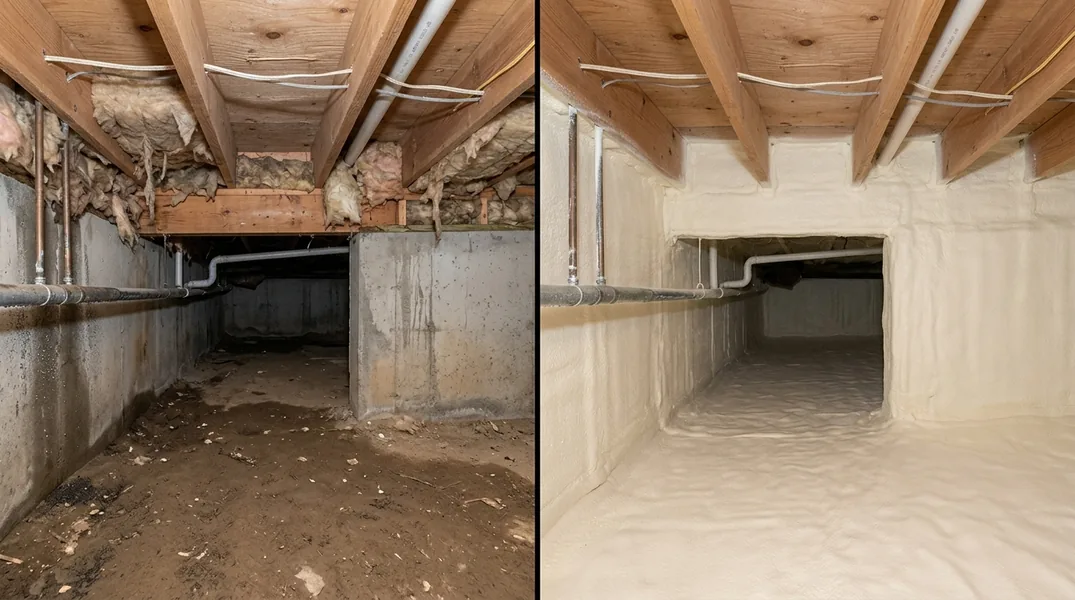
Why South Bend Homeowners Are Investing in Spray Foam Insulation
If you live in South Bend, you know how brutal winter heating bills can become. The region's cold winters and variable spring temperatures create significant energy demands on homes that rely on older insulation methods. Many homeowners in the area are discovering that Attic Spray Foam Insulation delivers measurable savings that justify the upfront investment within just a few years.
Traditional fiberglass batts and blown-in insulation leave gaps and air leaks that allow heated air to escape during winter months. Spray foam creates an airtight seal that conforms to every cavity, crack, and corner in your attic. This superior air sealing means your HVAC system works less hard to maintain comfortable temperatures, directly reducing your monthly energy consumption and utility costs. For homeowners already feeling the pinch of rising energy prices, this translates to real money saved every single month.
Attic Spray Foam Insulation Cost in South Bend: What to Budget
Understanding spray foam insulation cost is crucial before making your decision. The spray foam insulation cost per square foot typically ranges from $1.50 to $3.50, depending on the type of foam, your attic's size, and the complexity of the installation. For a typical 1,500-square-foot attic in South Bend, homeowners should budget between $2,250 and $5,250 for complete coverage. This is a significant investment, but when you factor in the energy savings over 15 to 20 years, the numbers become compelling.
How much does spray foam insulation cost for your specific home? The answer depends on several variables. Attic size is the primary cost driver, but so is the type of foam you choose. Closed Cell Spray Foam Insulation costs more per square foot (typically $2.50 to $3.50) but offers superior R-value and moisture resistance. Open Cell Spray Foam Insulation is more budget-friendly at $1.50 to $2.50 per square foot and works well in dry climates and interior applications. Rather than guessing, the best approach is to get a professional assessment. South Bend Spray Foam Insulation offers a free estimate so you'll know exactly what your project will cost before committing.
Many homeowners also ask about a spray foam cost calculator. While online calculators provide rough estimates, they can't account for local labor rates, attic accessibility, or regional energy costs. A personalized quote from a local contractor gives you accurate pricing tailored to your home and situation.
How Spray Foam Pays for Itself Through Energy Savings
The real payoff of spray foam insulation comes through reduced energy bills. Studies show that properly insulated attics can reduce heating costs by 10 to 30 percent, depending on your current insulation condition and local climate. In South Bend, where winter heating demands are substantial, these savings add up quickly. A homeowner spending $1,500 per year on winter heating might save $150 to $450 annually after spray foam installation.
Let's work through a realistic example. Suppose your cost to insulate attic with spray foam totals $4,000. If you save $250 per year on energy costs, you'll recover that investment in 16 years. Over the next 20 years (the typical lifespan of spray foam), you'd pocket an additional $1,000 in pure savings. Factor in the increased home comfort, reduced drafts, and potential boost to resale value, and the return on investment becomes even more attractive. Plus, many homeowners qualify for energy efficiency tax credits that can offset part of the initial cost.
The payback timeline also depends on energy prices. As utility rates continue climbing, your savings accelerate. A homeowner who breaks even in 16 years might see that timeline shrink to 12 years if energy costs rise by just 3 percent annually. This is why spray foam insulation is increasingly viewed as a smart financial move, not just an environmental one.
Closed Cell vs. Open Cell: Which Offers Better ROI?
Closed Cell Spray Foam Insulation and Open Cell Spray Foam Insulation deliver different returns on investment. Closed cell foam has a higher R-value (about 6.0 per inch) and provides superior moisture resistance, making it ideal for attics in humid climates or areas prone to moisture intrusion. The higher upfront cost is offset by better energy performance and longer durability in challenging conditions. If your South Bend home has experienced any roof leaks or moisture issues, closed cell foam's vapor barrier properties justify the extra investment.
Open cell foam costs less and still delivers excellent insulation performance with an R-value around 3.5 per inch. It's an air barrier but not a moisture barrier, which works fine in dry attics. For most South Bend homeowners with typical attics and no moisture concerns, open cell foam provides outstanding value. You'll spend less upfront and still enjoy significant energy savings. The choice really comes down to your specific attic conditions and budget. A professional contractor can assess your situation and recommend which type will deliver the best ROI for your home.
Additional Benefits Beyond Lower Energy Bills
While energy savings are the primary financial benefit, spray foam insulation delivers other advantages that add to the overall value. Improved home comfort is immediate and noticeable. No more cold spots near exterior walls or drafts from attic air leaks. Your heating system maintains more consistent temperatures throughout the house, eliminating the need to crank up the thermostat to compensate for heat loss. This comfort improvement alone makes many homeowners feel the investment was worthwhile.
Spray foam also extends the lifespan of your HVAC equipment. When your heating and cooling systems don't have to work as hard, they experience less wear and tear. This can delay expensive replacements and reduce maintenance costs over time. Additionally, the superior air sealing reduces noise from outside and improves indoor air quality by minimizing dust infiltration. Some homeowners also see modest increases in home resale value, though this varies by market.
If you're interested in exploring other insulation options for your home, Wall & Injection Foam Insulation can address energy loss in exterior walls and hard-to-reach cavities. This complementary service maximizes your home's thermal envelope and energy efficiency gains.
Getting Your Free Estimate and Starting Your Savings Journey
The first step toward lower energy bills is understanding your specific situation. Every home is different, and the cost to insulate attic varies based on your unique circumstances. South Bend Spray Foam Insulation provides detailed free estimate consultations where our team evaluates your attic, discusses your energy concerns, and provides transparent pricing with no surprises.
Ready to take control of your energy bills? Call South Bend Spray Foam Insulation at (574) 406-8438 to schedule your consultation. Our experienced team will answer all your questions about spray foam insulation cost, energy savings potential, and the right solution for your home. With decades of experience serving homeowners throughout the region, we're committed to helping you make an informed decision that pays dividends for years to come. Don't let another winter pass paying inflated heating bills. Contact us today and discover how spray foam insulation can transform your home's efficiency and your wallet.
Looking for a professional spray foam insulation contractor in South Bend? South Bend Spray Foam Insulation responds fast for all your spray foam insulation needs.
Get a Free Quote