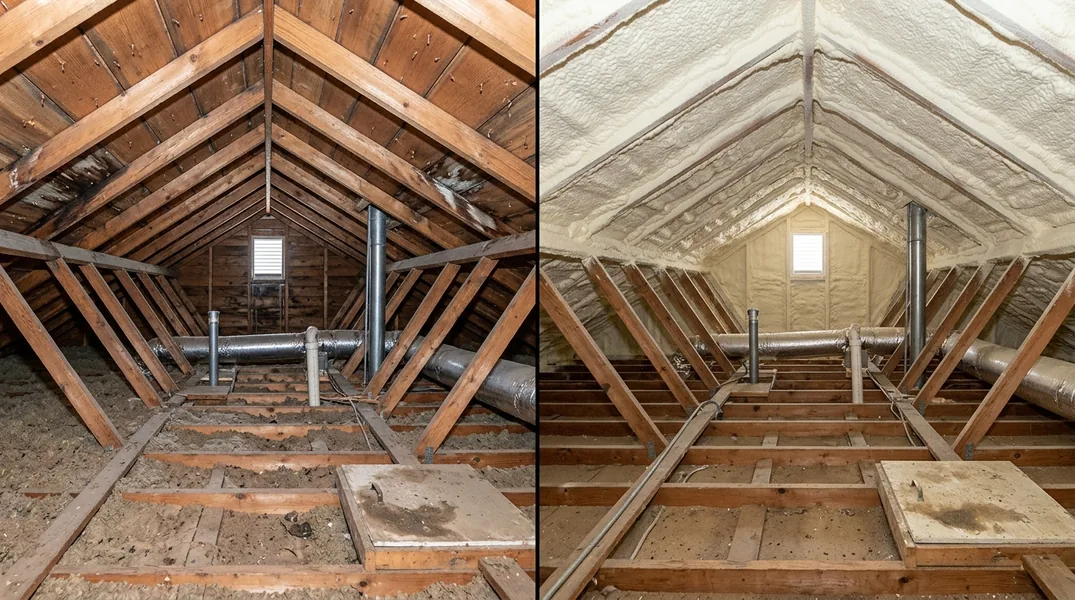
Why Settled Insulation Is a Problem in Mishawaka's Older Homes
If you own a postwar ranch home in Mishawaka, you've likely encountered a common problem: insulation that has settled, compacted, or shifted over the decades. Many of these mid-century homes were originally insulated with fiberglass batts or blown-in cellulose, materials that naturally lose effectiveness as they age and compress under their own weight. What started as a full R-value in 1950 or 1960 may now provide only a fraction of its original thermal resistance.
Settled insulation creates real consequences for your home's comfort and energy bills. When insulation compacts, it leaves air gaps and voids in your attic, allowing warm air to escape in winter and hot air to infiltrate in summer. South Bend's cold winters and humid summers make this problem especially costly. Homeowners often notice higher heating and cooling bills, uneven temperatures between rooms, and moisture issues that can lead to mold growth or wood rot. The structural integrity of your home depends on proper insulation performance, and settling undermines that protection year after year.
Spray Foam vs Blown-In Insulation: Which Lasts Longer?
When comparing spray foam vs blown-in insulation, the longevity difference is striking. Blown-in insulation, whether fiberglass or cellulose, relies on gravity and air pressure to stay in place. Over time, vibrations from wind, temperature fluctuations, and the natural weight of the material cause it to settle. Studies show blown-in insulation can lose 10 to 20 percent of its R-value within the first few years, and continues degrading as it ages. In Mishawaka's climate, where temperature swings are significant, this settling accelerates.
Attic Spray Foam Insulation performs fundamentally differently. When applied, spray foam expands and hardens into a solid, monolithic mass that bonds to framing, joists, and existing surfaces. It does not settle, compress, or shift. The material maintains its R-value for the life of your home, typically 80 years or more. Because spray foam also creates an air seal, it prevents convection and air leakage that blown-in materials cannot stop. For homeowners tired of replacing or topping up insulation every decade, spray foam offers a permanent solution.
Spray Foam vs Fiberglass: Superior Moisture Control
The battle between spray foam vs fiberglass becomes especially important in attics prone to moisture. Fiberglass batts and blankets absorb moisture readily. Once wet, they lose insulating value and create an environment where mold, mildew, and wood-destroying fungi thrive. Mishawaka homeowners with older attics often discover moisture problems hidden behind settled fiberglass, leading to expensive repairs and health concerns.
Closed Cell Spray Foam Insulation is hydrophobic, meaning it repels water and resists moisture absorption. It also acts as a vapor barrier, preventing humid indoor air from migrating into the attic where it can condense on cold roof decking. This dual advantage makes closed-cell foam ideal for attics in humid climates. Open-cell spray foam, while slightly less moisture-resistant, still outperforms fiberglass by a wide margin and offers excellent sound dampening as a bonus. Either way, spray foam protects your attic structure and your family's health in ways traditional insulation cannot match.
Best Insulation for Attic: Why Spray Foam Wins the Comparison
When evaluating the best insulation for attic spaces, spray foam consistently ranks highest among performance metrics. It delivers superior R-value per inch, eliminating thermal bridging through framing members. It seals air leaks that account for 25 to 40 percent of heating and cooling losses in older homes. It resists settling, moisture, pests, and degradation. Compared to spray foam vs cellulose, the choice becomes clear: cellulose is organic material that attracts insects, absorbs moisture, and settles significantly over time. Spray foam is chemically inert, pest-resistant, and stable for decades.
The real-world performance difference translates to measurable energy savings. Homeowners in Mishawaka who switch from settled fiberglass or cellulose to spray foam often report 15 to 30 percent reductions in heating and cooling costs. Your attic is the largest thermal boundary in your home; investing in the best insulation available pays for itself through lower utility bills and improved comfort. Beyond energy savings, spray foam increases home value, reduces HVAC strain, and eliminates many common attic problems in one upgrade.
Attic Spray Foam Insulation Near Me: When to Call a Professional
If you're noticing signs of settled insulation in your Mishawaka home, now is the time to call a professional. Warning signs include visible gaps or compression in your attic insulation, higher-than-normal heating and cooling bills, cold spots or drafts in upper-floor rooms, and visible moisture, mold, or musty odors in the attic space. A qualified spray foam contractor can assess your current insulation, identify air leaks, and design a solution tailored to your home's unique needs and your budget.
South Bend Spray Foam Insulation specializes in retrofitting older homes in the region, including Mishawaka's distinctive postwar architecture. We understand the thermal challenges these homes face and the long-term benefits of modern spray foam technology. Our team handles everything from removal of old, settled insulation to professional application of spray foam that meets or exceeds building codes. Don't let another winter pass with inadequate insulation. Reach out for a free estimate or call us at (574) 406-8438 to discuss your attic insulation needs.
Attic Spray Foam Insulation Cost in South Bend: What to Budget
The investment in Attic Spray Foam Insulation varies based on attic size, existing insulation that must be removed, and whether you choose closed-cell or open-cell foam. Closed-cell foam costs more per square foot but delivers higher R-value and superior moisture resistance, making it ideal for attics in humid climates or homes with moisture history. Open-cell foam is more affordable and still vastly superior to blown-in or fiberglass alternatives. Most attic projects in the South Bend area range from moderate to significant investments, but the payback period through energy savings typically spans 5 to 10 years, after which you enjoy free insulation performance for decades.
When evaluating pricing, remember that the cheapest option upfront is rarely the best long-term choice. Blown-in insulation may cost less initially, but it will settle, require topping up, and eventually need replacement. Spray foam is a one-time investment that protects your home for the rest of its life. South Bend Spray Foam Insulation offers competitive rates and transparent quotes with no hidden fees. We're happy to break down the costs and help you understand the return on investment for your specific attic. Contact us today at (574) 406-8438 to schedule a consultation and receive a detailed estimate for your home.
Looking for a professional spray foam insulation contractor in South Bend? South Bend Spray Foam Insulation responds fast for all your spray foam insulation needs.
Get a Free Quote